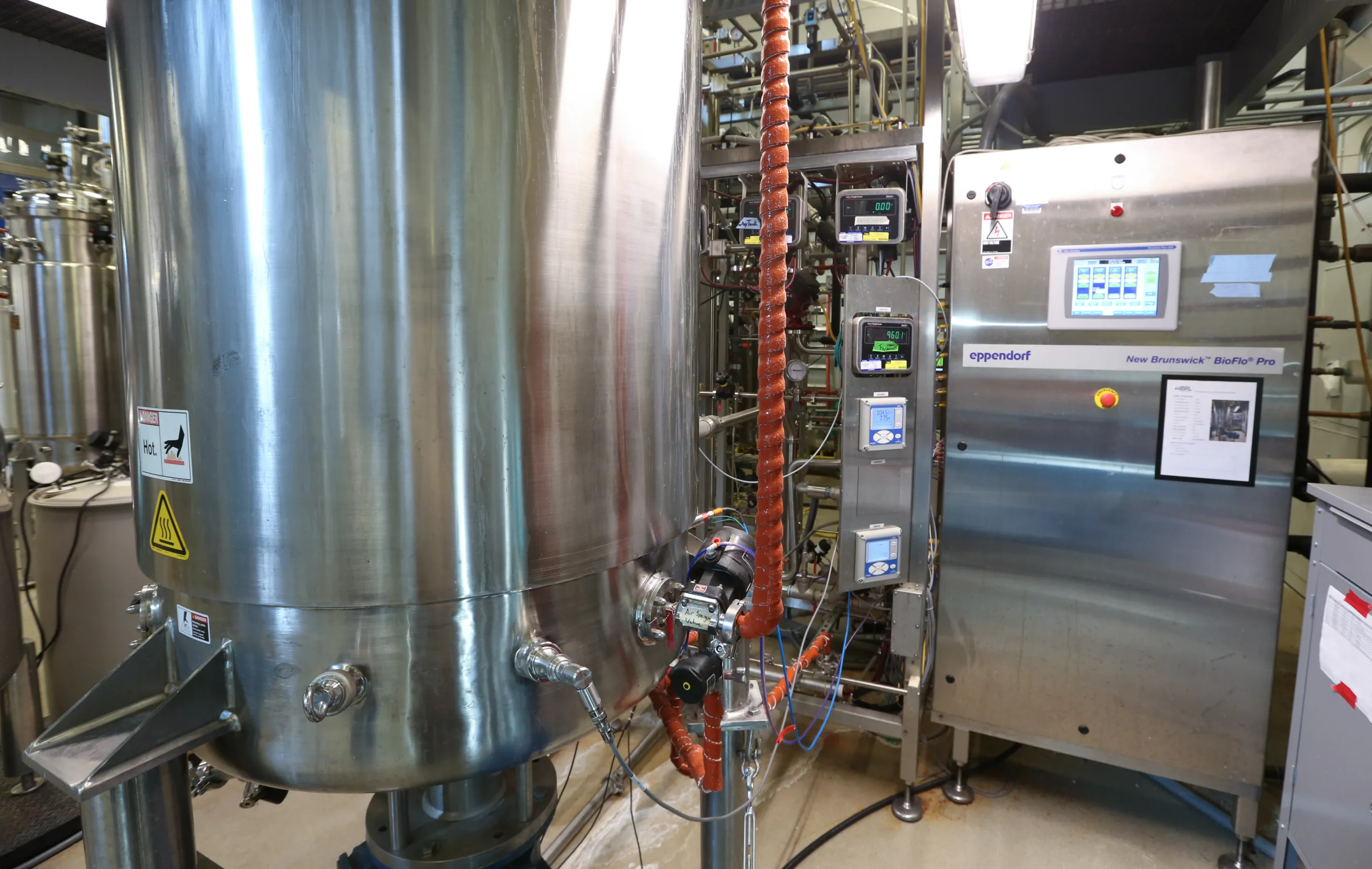
A critical step in expanding domestic energy production in the United States involves extracting fermentable cellulosic sugars from bioenergy crops. These sugars are vital raw materials used to produce high-value chemicals, products, and fuels domestically. However, the commercial scale-up of this sector has faced a persistent economic obstacle due to the high price of commercial cellulase enzymes required to break down plant matter into sugar.
A new study addresses this bottleneck by demonstrating a strategy that has the potential to sharply lower production costs using a plant-based bio-manufacturing platform by turning the crops themselves into low-cost factories that can manufacture the critical enzyme. By engineering plants to synthesize and hyperaccumulate specialized proteins (such as bacterial cellulase enzymes) directly within their leaf structures, the study establishes a scalable and economical method to strengthen and secure domestic bioenergy supply chains.
Key Breakthroughs for U.S. Energy Independence
- Overcoming the Enzyme Cost Bottleneck: Traditional refining depends on expensive external enzymes to extract sugars. This research outlines a pathway to produce these enzymes inside the plant tissue, dramatically reducing the overall operational expenses associated with refining bioenergy feedstocks.
- Hyperaccumulation Power of Plants: Plants have an immense, underutilized capacity to synthesize and safely store transgenic proteins within their cellular compartments (plastids) without damaging the crop’s health. This study demonstrates that functional proteins can be extracted in their active form in an economic way, which can be performed at a large scale with the existing facilities.
- Potential Reduction of Saccharification Cost: Considering leaf biomass yield of tobacco plants from 27-100 tons per hectare, approximately 20–75 kg of cellulase protein per hectare of tobacco grown can be obtained. Based on the experimental data presented in the study, the cost of saccharification of 1 ton of plant material can be as low as 100-200 USD, which is a hundredfold lower price compared to the use of commercial cellulase.
By utilizing the inherent biology of the plants to bypass expensive industrial inputs, this breakthrough provides agribusinesses and the domestic energy sector with a practical blueprint to make second-generation biofuels economically competitive with traditional energy sources.
Study Details & Metadata
- Article Title: Harnessing Plant-based Platform for Low-cost Cellulosic Sugar Recovery from Bioenergy Crops
- Journal: Biofuels, Bioproducts & Biorefining
- DOI: 10.1002/bbb.70187
- Funding & Support: This work was supported by the Center for Advanced Bioenergy and Bioproducts Innovation (CABBI), funded by the U.S. Department of Energy (DOE). It is published as an open-access article.
- Principal Investigator Contact: Vijay Singh – vsingh@illinois.edu
AI Acknowledgement: This summary was prepared with the assistance of an AI collaborator.