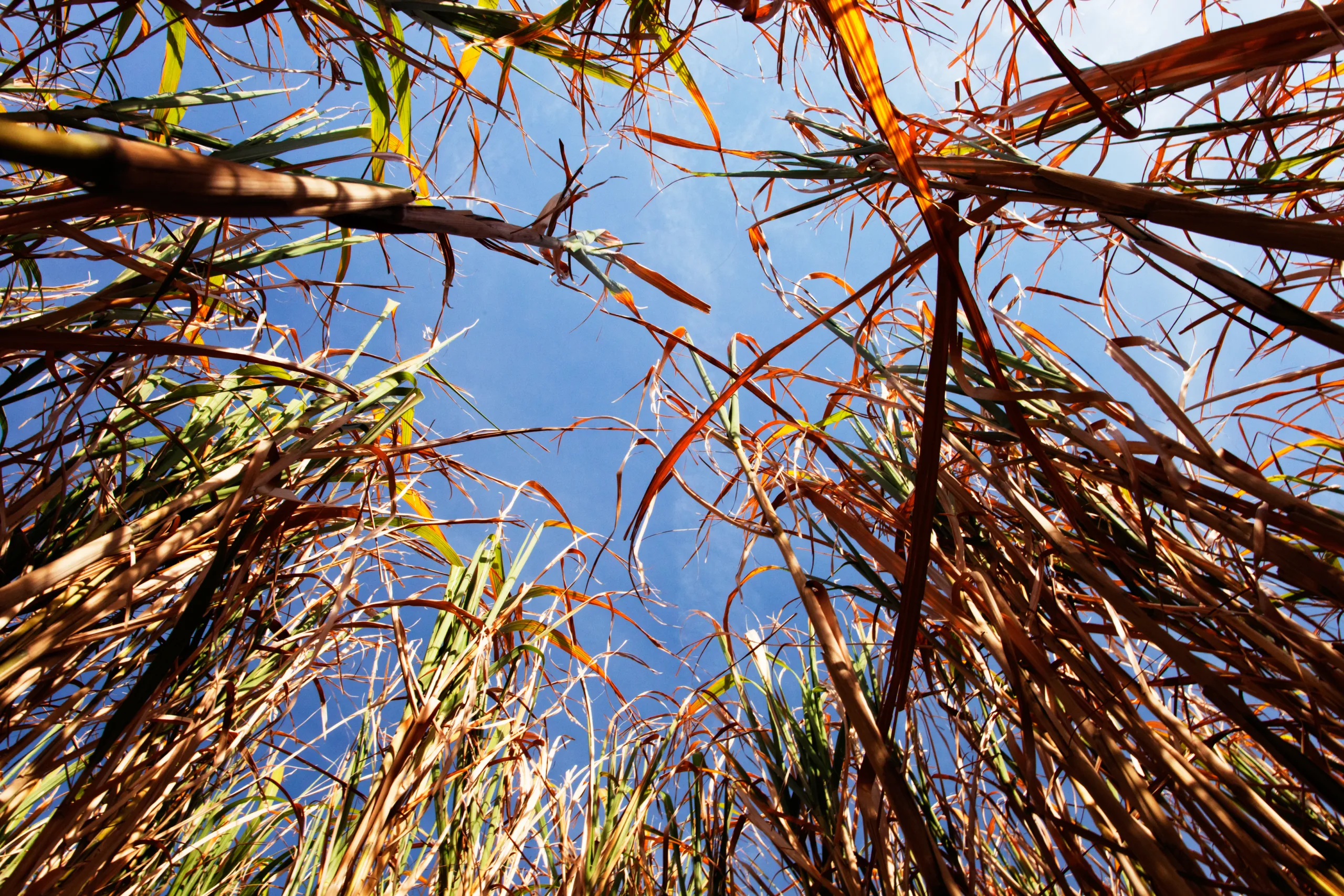
As the United States increases its focus on increasing domestic energy production and strengthening the American bioeconomy, dedicated energy crops are becoming vital national resources. Among these, Miscanthus × giganteus (Miscanthus) – a towering, fast-growing perennial grass – stands out for its ability to produce massive volumes of biomass that can be converted into home-grown chemicals, products, and fuels. However, maximizing its harvest potential across diverse U.S. regions requires a precise understanding of how the crop grows under different environmental conditions.
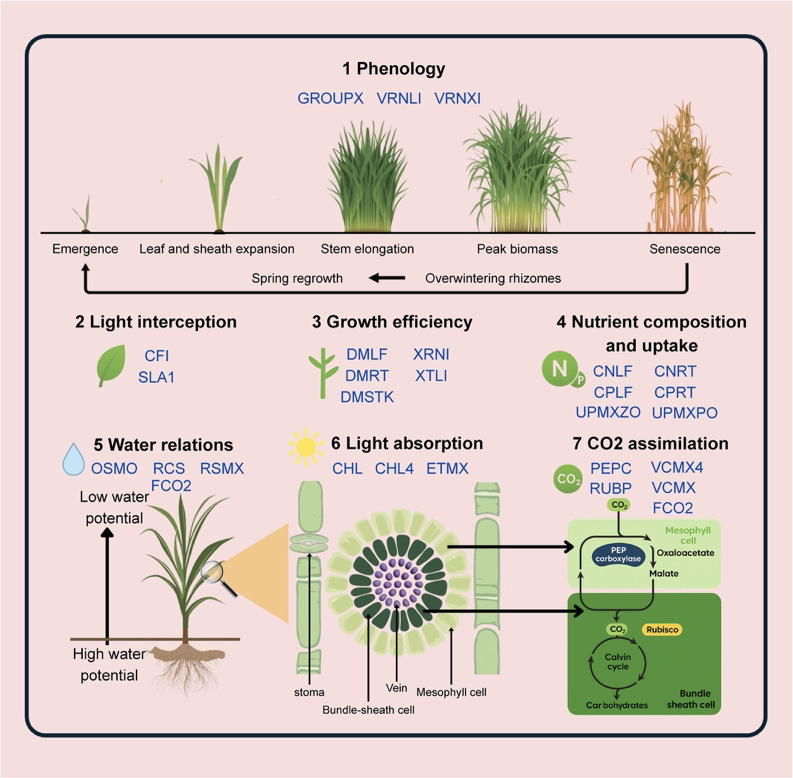
A new study has successfully integrated Miscanthus into an advanced, process-based agroecosystem model called ecosys. By constraining the model with real-world field data, researchers were able to reproduce key aspects of Miscanthus phenology, carbon, and water fluxes, and biomass production. This work provides a highly reliable modeling foundation to predict crop yields and evaluate the performance of large-scale domestic biomass production.
Key Breakthroughs for U.S. Energy Feedstocks
- A Precision Process-Based Model: Researchers engineered a detailed model representation of the sterile triploid Miscanthus (IL clone), enabling process-based simulation of its growth and ecosystem functioning.
- Grounded in Real-World Observations: Researchers used PhenoCam and field observations to constrain Miscanthus phenology and calibrate its physiology, substantially improving the model’s ability to capture how the crop grows and functions in the real world.
- Decoding Photosynthetic Efficiency: The study isolated the specific biological mechanisms that drive biomass volume. It revealed that a plant’s internal protein allocation establishes its baseline growth potential, while its electron transport capacity dictates the maximum additional yield it can achieve.
By mapping these intricate internal mechanics, this research gives scientists and key stakeholders a strong foundation for predicting Miscanthus performance under different environmental conditions. Ultimately, this modeling framework provides the analytical foundation needed to evaluate and support the scaling up of domestic biomass supply chains, bolstering American energy security and enhancing regional agricultural productivity.
Study Details & Metadata
- Article Title: Physiological Controls on Carbon Fluxes and Biomass Production in Miscanthus: Insights From a Process-Based Agroecosystem Model
- Journal: GCB Bioenergy
- DOI: 10.1111/gcbb.70155
- Funding & Support: This work was supported by the Center for Advanced Bioenergy and Bioproducts Innovation (CABBI), a Bioenergy Research Center funded by the U.S. Department of Energy (DOE). It is published as an open-access article.
- Principal Investigator Contact: Kaiyu Guan – kaiyug@illinois.edu
AI Acknowledgement: This summary was prepared with the assistance of an AI collaborator.