Data for Nitrogen Dynamics and Physiological N Use Efficiency in High-Biomass Sorghum
Themes: Sustainability
Keywords: Nitrogen, Sorghum
Citation
Jang, C., Hoffman Jr., L., Villamil, M., Rooney, W., Lee, D.K. Jan. 29, 2026. Data for: “Nitrogen Dynamics and Physiological N Use Efficiency in High-Biomass Sorghum.” University of Illinois Urbana-Champaign. DOI: 10.13012/B2IDB-8910263_V1.
Overview
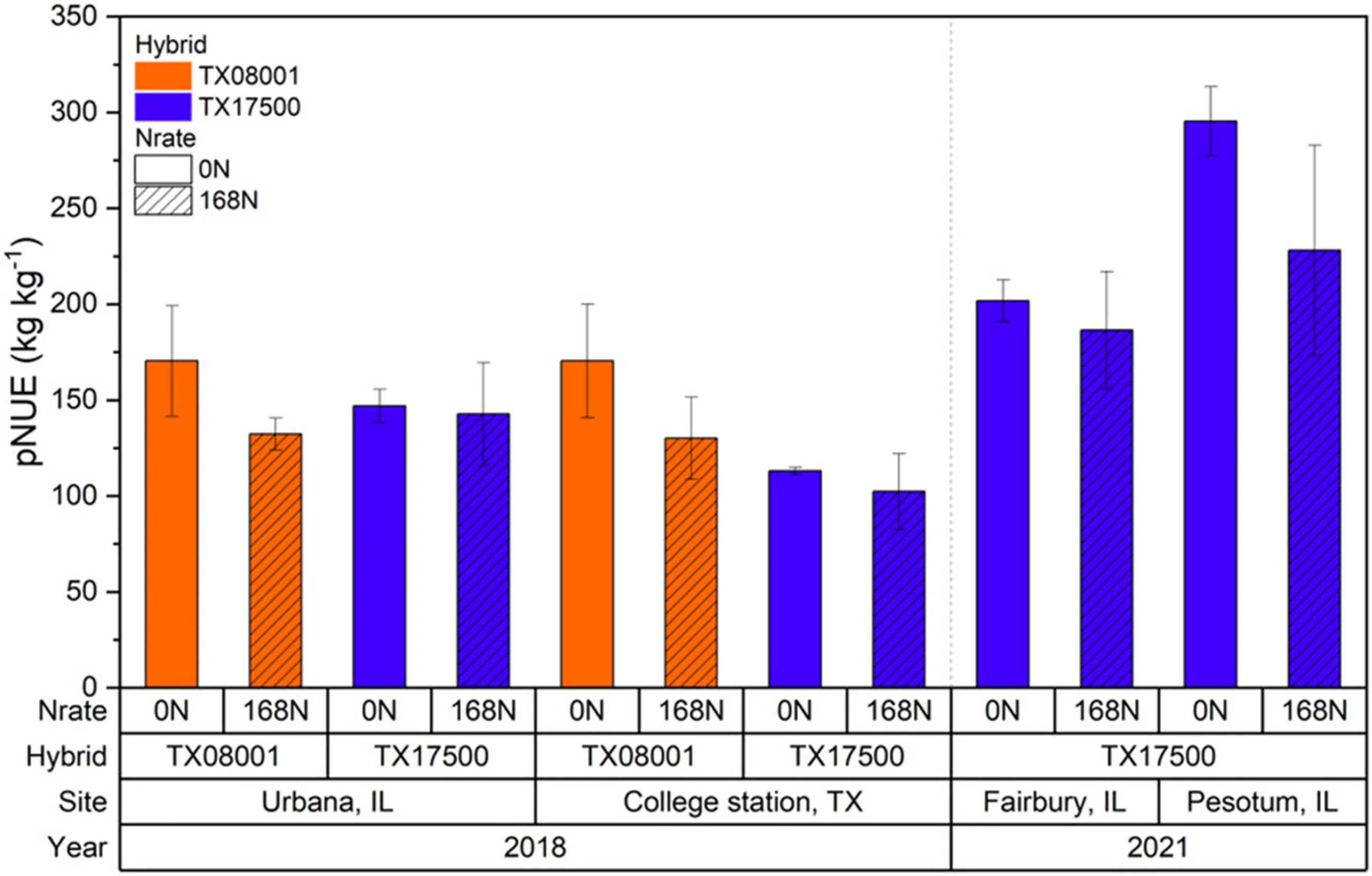
Improving nitrogen (N) efficiency is essential for sustainable high-biomass sorghum (Sorghum bicolor L. Moench) production. This study evaluated leaf and stem N dynamics, canopy N remobilization, and physiological nitrogen use efficiency (pNUE) in two photoperiod-sensitive sorghum hybrids under two N rates (0 and 168 kg-N ha−1) across multiple environments in Texas and Illinois. Leaf N concentrations increased with plant height in the canopy with steeper gradients under low-N conditions, indicating enhanced N remobilization when N is limited. Stem tissue showed less variation in N concentration across canopy nodal positions, with within-plant differences ranging from 1.2 to 7.6 g kg−1, compared to 3.1 to 16.3 g kg−1 in leaves. While pNUE was generally higher under unfertilized conditions, it varied largely by site; however, genotypic differences were minimal within the given year. These results highlight the importance of integrating environmental and management factors into breeding and fertilization strategies to enhance N efficiency in high-biomass sorghum.
Data
Illinois Data Bank: Leaf/stem N concentrations, baseline soil characteristics, biomass data, monthly precipitation/temperature data