Data for Interactive Effects of Precipitation, Temperature, and Grazing Pressure on the Net Ecosystem Carbon Balance of Grazing Lands Across the Continental United States
Themes: Sustainability
Keywords: Carbon, Ecosystem Flux, Ecosystem Science, Modeling, Water
Citation
Chen, Z., Rosvel, B., Silveira, M.L., Awada, T., Bernacchi, C.J., Browning, D.M., Clark, P.E., Derner, J.D., DeLucia, E.H., Erickson, G.E., Flerchinger, G.N., Fortuna, A.M., Gomez-Casanovas, N., Hiestand, M., Hoover, D.L., Kaplan, N.E., Khorchani, M., Liebig, M.A., Schreiner-McGraw, A.P., Scott, R.L., Sparks, J., Sun, X., Toledo, D., Wagle, P., Boughton, E.H. Aug. 5, 2026. Data for “Interactive Effects of Precipitation, Temperature, and Grazing Pressure on the Net Ecosystem Carbon Balance of Grazing Lands Across the Continental United States.” University of Illinois Urbana-Champaign. DOI: 10.13012/B2IDB-2672517_V1.
Overview
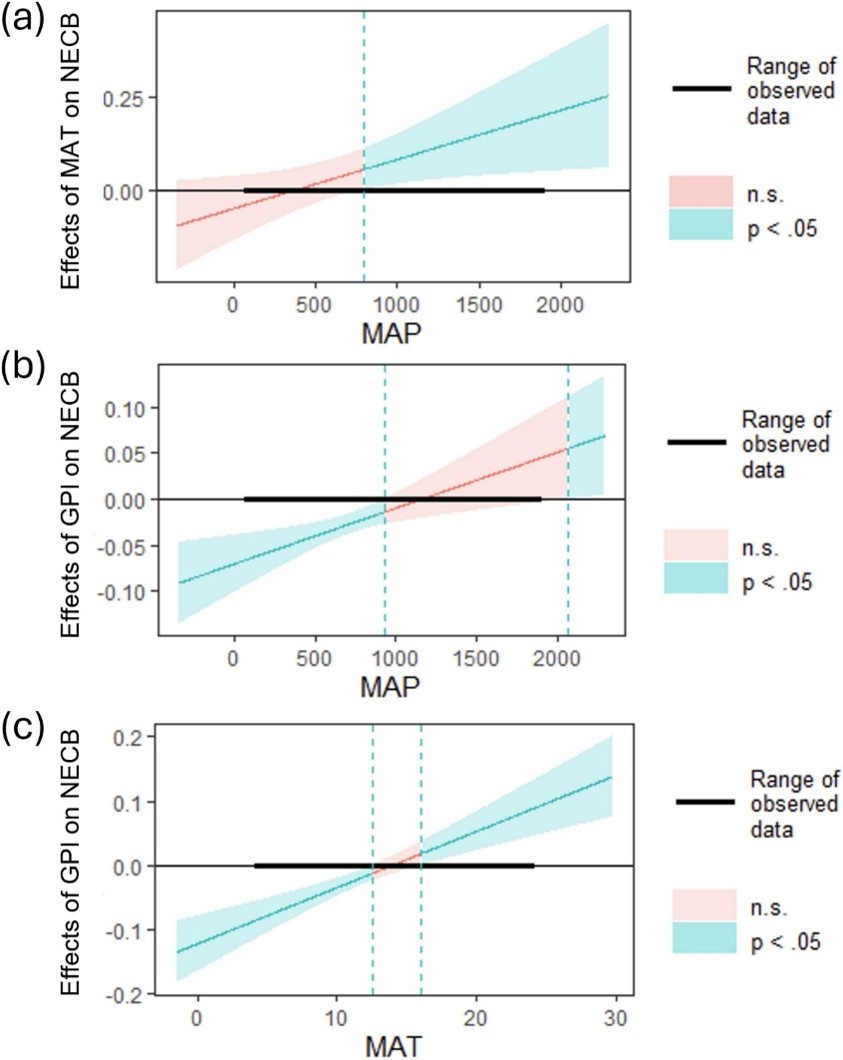
Grazing lands cover approximately one-third of the contiguous United States, support much of the nation’s beef production, and are an important component of the U.S. terrestrial carbon budget. In this study, we quantified net ecosystem carbon balance (NECB), the net status of grazing lands as a carbon sink (C-sink) or source (C- source) and a key determinant of soil health and productivity. Our primary objective was to synthesize multiple years of annual NECB across heterogeneous grazing lands across the continental U.S and evaluate annual NECB against physical drivers (mean annual precipitation (MAP), mean annual temperature (MAT), vegetation, and moisture condition) and management practices (grazing pressure index (GPI) and fertilization history). We hypothesized that (1) NECB is higher in mesic and fertilized grasslands; (2) NECB increases with MAP and MAT but decreases with GPI; and (3) interactive effects exist among MAP, MAT, and GPI. Using carbon fluxes measured by eddy covariance towers and methane emissions including both enteric methane and manure derived from stocking rates across seven USDA Long-term Agroecosystem Research Network sites, we found: (1) grazing lands were a C-sink or carbon neutral at most sites; (2) vegetation type, moisture conditions, or fertilization had no significant effect on NECB; (3) NECB increased with MAP and MAT, but decreased with a higher GPI; and (4) MAT had a significant positive effect on NECB when MAP exceeded 750 mm (greater water availability). The effect of GPI on NECB was significantly negative when MAP was below 1000 mm, significantly negative when MAT < 12 C and significantly positive when MAT > 16 ◦ C. Thus, most grazing lands in our study acted as C- sinks unless water deficit, low temperature, or heavy grazing were interactively present. Understanding how climate and management influence NECB of grazing lands is key to maintaining resilient agroecosystems that secure beef production and sustain rural prosperity.
Data
Illinois Data Bank: Average net carbon balance/fluxes, linear regressions, final model results, eddy covariance tower and pasture data