Data and Code for Asymmetric Enzymatic Hydrophosphorylation Through O2 Activation
Themes: Conversion
Keywords: Biocatalysis, Bioproducts, Protein Engineering
Citation
Zhou, Y., Ge, Y., Harrison, W., Zhao, H. Nov. 9, 2026. “Input datasets and code for Asymmetric enzymatic hydrophosphorylation through O2 activation.” University of Illinois Urbana-Champaign. DOI: 10.13012/B2IDB-4996177_V1.
Zhou, Y., Ge, Y., Harrison, W., Zhao, H. Nov. 9, 2026. “ERP Spectra and Simulation Results for Asymmetric enzymatic hydrophosphorylation through O2 activation.” University of Illinois Urbana-Champaign. DOI: 10.13012/B2IDB-7697540_V1.
Zhou, Y., Ge, Y., Harrison, W., Zhao, H. Aug. 21, 2026. “Data for: Asymmetric enzymatic hydrophosphorylation via O₂ activation.” Dryad. Dataset. DOI: 10.5061/dryad.z34tmpgwg
Overview
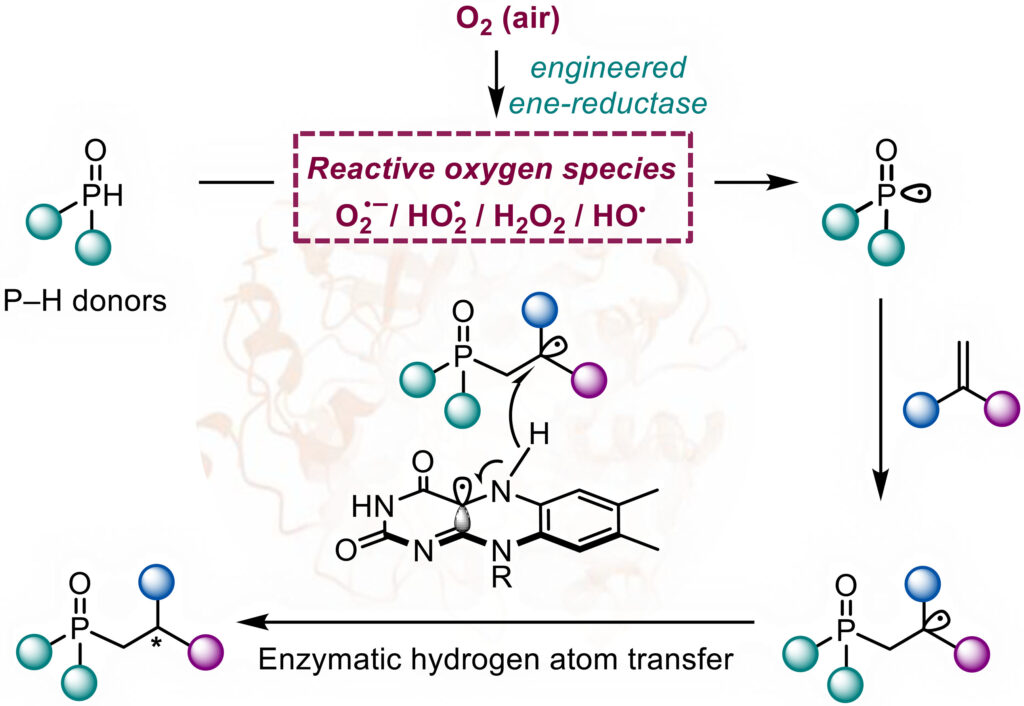
Enzymatic carbon-phosphorus bond formation is extremely rare in nature, limiting biocatalytic access to phosphorus-containing compounds that are widely used in pharmaceuticals and agrochemicals. Here, we report an asymmetric enzymatic hydrophosphorylation through oxygen activation using a repurposed flavin-dependent enzyme. Mechanistic studies revealed that reactive oxygen species are converted into productive phosphorus-centered radicals, followed by radical addition and enzymatic hydrogen atom transfer, achieving high enantioselectivity. The enzyme accommodates diverse phosphorus-hydrogen donors that pose challenges to chemical catalysis, enabling the biosynthesis of valuable phosphorus-containing scaffolds. This work expands the scope of biocatalysis to programmable carbon-phosphorus bond formation and establishes a paradigm for channeling oxygen reactivity in enzymes.
Data
Illinois Data Bank: screening and prediction tables, input data, and code
Illinois Data Bank: EPR spectra, spectra measurements, and simulations
Dryad: computational results