Miscanthus giganteus Biolistic Transformation Using the Visible RUBY Red Marker Gene to Monitor Transformation Efficiency
Themes: Feedstock Production
Keywords: Gene Editing, Miscanthus, Miscanthus × giganteus, Plant Transformation
Citation
Muthukumar, B., Doran, L., Haas, B., Sabonska, K., Szul, M., Kumar, A., Kern, C., Ort, D.R., Long, S.P. July 22, 2026. Data for: “Miscanthus giganteus Biolistic Transformation Using the Visible RUBY Red Marker Gene to Monitor Transformation Efficiency.” University of Illinois Urbana-Champaign. DOI: 10.13012/B2IDB-9428759_V1.
Overview
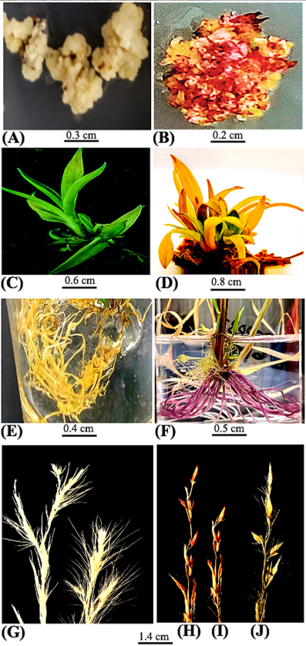
Miscanthus × giganteus (M×g) is a high- yielding perennial C4 bioenergy crop, but genetic improvement by breeding is constrained by triploid sterility and clonal propagation. Improving genetic transformation methods for M×g would provide opportunities for advantageous trait introgression. Use of an easy to phenotype reporter gene is a promising strategy to improve transformation processes and efficiency. This study presents an efficient novel method for biolistic transformation of inflorescence- derived callus in M×g and demonstrates its efficacy using RUBY, a betalain-based noninvasive reporter that is visible throughout the transformation process. RUBY expression (Zea mays codon optimized) was visible from callus stage through plantlet development into maturity. RUBY expressing independently transformed plants were confirmed by hygromycin phosphotransferase ELISA and by genomic PCR demonstrating that the RUBY phenotype is sufficient for screening transformants. The Zea mays codon optimized hygromycin selection marker was driven by previously established promoters for Miscanthus, ZmUBI and 2×35S, while the RUBY gene expression was controlled by a known Zea mays C4 promoter, Brachypodium UBI10, newly employed in Miscanthus. The construct containing the 2×35S promoter for hygromycin had a 15.1% transformation efficiency while the ZmUBI promoter had a 20.5% transformation efficiency. This study provides a novel, highly efficient protocol for successful biolistic transformation of M×g for stable expression. This study also demonstrates that RUBY expression can be used as a convenient and powerful monitor of transformation in ongoing and future work to engineer M×g into an improved bioproduct feedstock.
Data
Illinois Data Bank: Protein expression and transformation confirmations, transformation efficiency and protocol comparisons, supplementary figures